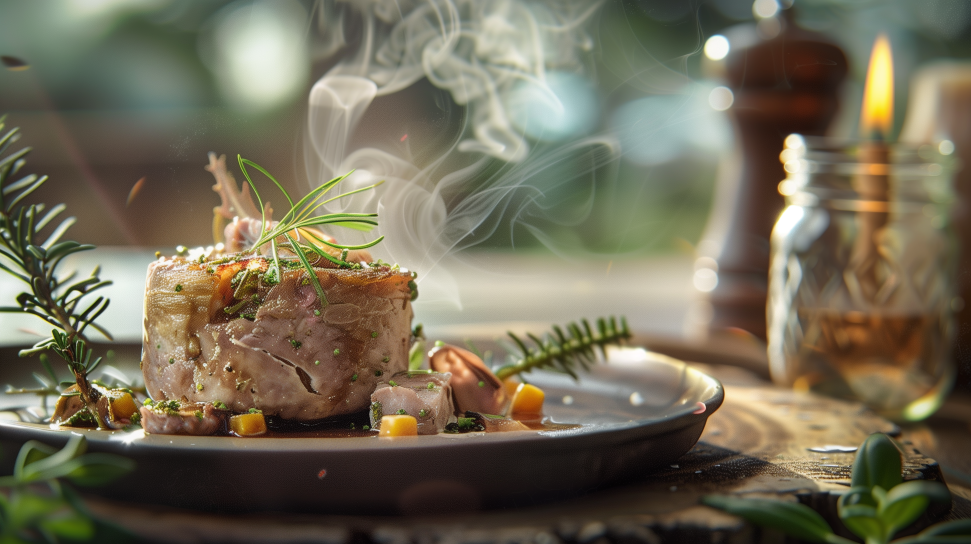
Wild Boar Head Cheese
Wild Boar Recipe
1Setup & Prepare
About This Recipe
This expertly prepared wild boar recipe delivers delicious results that highlight the natural flavors. Using careful attention to detail, you'll create a dish that showcases the unique qualities of wild game while remaining approachable for home cooks.
Traditional European technique
Nose-to-Tail Cooking Head cheese represents the ultimate in nose-to-tail cooking, transforming the head into a rustic, flavorful terrine using traditional European techniques.
Ingredients (Serves 15-20)
- 1 wild boar head, cleaned and quartered
- 4 pig's feet (for gelatin)
- 2 onions, quartered
- 4 carrots, chunked
- 4 celery stalks, chunked
- 2 bay leaves
- 1 tbsp black peppercorns
- 2 tbsp fresh herbs (thyme, sage, parsley)
- 2 tsp salt
- 1 tsp white pepper
Method
-
Initial Cooking: Place the head and feet in a large pot, cover with water, and simmer gently for 3 to 4 hours.
-
Meat Removal: When cool enough to handle, pick every bit of meat from the bones. Don't waste any of it.
-
Stock Reduction: Strain the cooking liquid and reduce it by half, about 8-10 minutes. It should become rich and gelatinous.
-
Seasoning: Season the picked meat generously with herbs, spices, and a splash of vinegar for brightness.
-
Molding: Pack the seasoned meat firmly into terrine molds or loaf pans.
-
Stock Addition: Pour the reduced stock over the meat, making sure it fills all the gaps.
-
Setting: Refrigerate overnight. The stock will set into a firm, sliceable terrine.
2Ingredients
Shopping List
3Cooking Instructions
-
Initial Cooking: Place the head and feet in a large pot, cover with water, and simmer gently for 3 to 4 hours.
-
Meat Removal: When cool enough to handle, pick every bit of meat from the bones. Don't waste any of it.
-
Stock Reduction: Strain the cooking liquid and reduce it by half, about 8-10 minutes. It should become rich and gelatinous.
-
Seasoning: Season the picked meat generously with herbs, spices, and a splash of vinegar for brightness.
-
Molding: Pack the seasoned meat firmly into terrine molds or loaf pans.
-
Stock Addition: Pour the reduced stock over the meat, making sure it fills all the gaps.
-
Setting: Refrigerate overnight. The stock will set into a firm, sliceable terrine.
Essential Temperature Guidelines
- Whole muscle cuts: 145°F minimum for safety (trichinosis prevention)
- Ground boar: 160°F for food safety
- Slow-cooked cuts: 195-203°F for proper texture
- Medium doneness: 140-145°F for chops and steaks
Utilizing Natural Fat Content
- No additional fat needed: Unlike most game, boar is naturally well-marbled
- Render and save fat: Excellent for cooking vegetables and other applications
- Temperature control: Fat content makes overcooking less likely
- Seasoning balance: Rich meat requires bold seasonings
Processing and Storage
- Immediate processing: Process quickly after harvest for best quality
- Proper aging: 7-10 days aging improves tenderness and flavor
- Temperature control: Keep at 32-38°F during processing
- Vacuum sealing: Extends storage life significantly
- Portion control: Package in meal-sized portions for convenience
Wine and Beverage Pairings
- Italian reds: Chianti, Brunello, Barolo for Italian preparations
- French wines: Côtes du Rhône, Burgundy for French dishes
- American wines: Zinfandel, Cabernet Sauvignon for BBQ preparations
- Beer pairings: Belgian ales, German lagers, American craft beers
- Spirits: Bourbon, rye whiskey for American-style preparations
Seasonal Considerations
- Fall animals: Highest fat content from mast feeding (acorns, nuts)
- Diet influence: Acorn-fed boar has sweetest, nuttiest flavor
- Processing timing: Cool weather ideal for processing and curing
- Menu planning: Rich meat perfect for cold weather menus
Wild boar represents the perfect intersection of European hunting tradition and American abundance. These intelligent, adaptable animals provide some of the finest eating in the game meat world, with natural marbling that makes them more forgiving to cook than most wild game while delivering superior flavor complexity. The key to success lies in understanding the meat's richness and applying techniques that complement rather than mask its exceptional natural flavors.
FDA Food Safety Guidelines
⚠️ Important: Wild Boar carries a risk of Trichinella parasites. ALL cuts — including steaks, roasts, and ground meat — must reach an internal temperature of 165°F (74°C). There is no safe rare or medium-rare preparation for this species.
- Always use an instant-read meat thermometer to verify doneness.
- Wash hands, utensils, and surfaces after handling raw wild game.
- Thaw frozen game in the refrigerator — never at room temperature.
- Refrigerate leftovers within 2 hours of cooking.
Nutritional Information
Per serving: 420 calories, 36g protein, 27g fat, 12g carbohydrates.
▶Watch the Recipe
See the techniques in action with our step-by-step video guide
4Chef's Notes & Pairings
FDA Food Safety Guidelines
⚠️ Important: Wild Boar carries a risk of Trichinella parasites. ALL cuts — including steaks, roasts, and ground meat — must reach an internal temperature of 165°F (74°C). There is no safe rare or medium-rare preparation for this species.
- Always use an instant-read meat thermometer to verify doneness.
- Wash hands, utensils, and surfaces after handling raw wild game.
- Thaw frozen game in the refrigerator — never at room temperature.
- Refrigerate leftovers within 2 hours of cooking.
Nutrition Facts
Per serving: 420 calories, 36g protein, 27g fat, 12g carbohydrates.